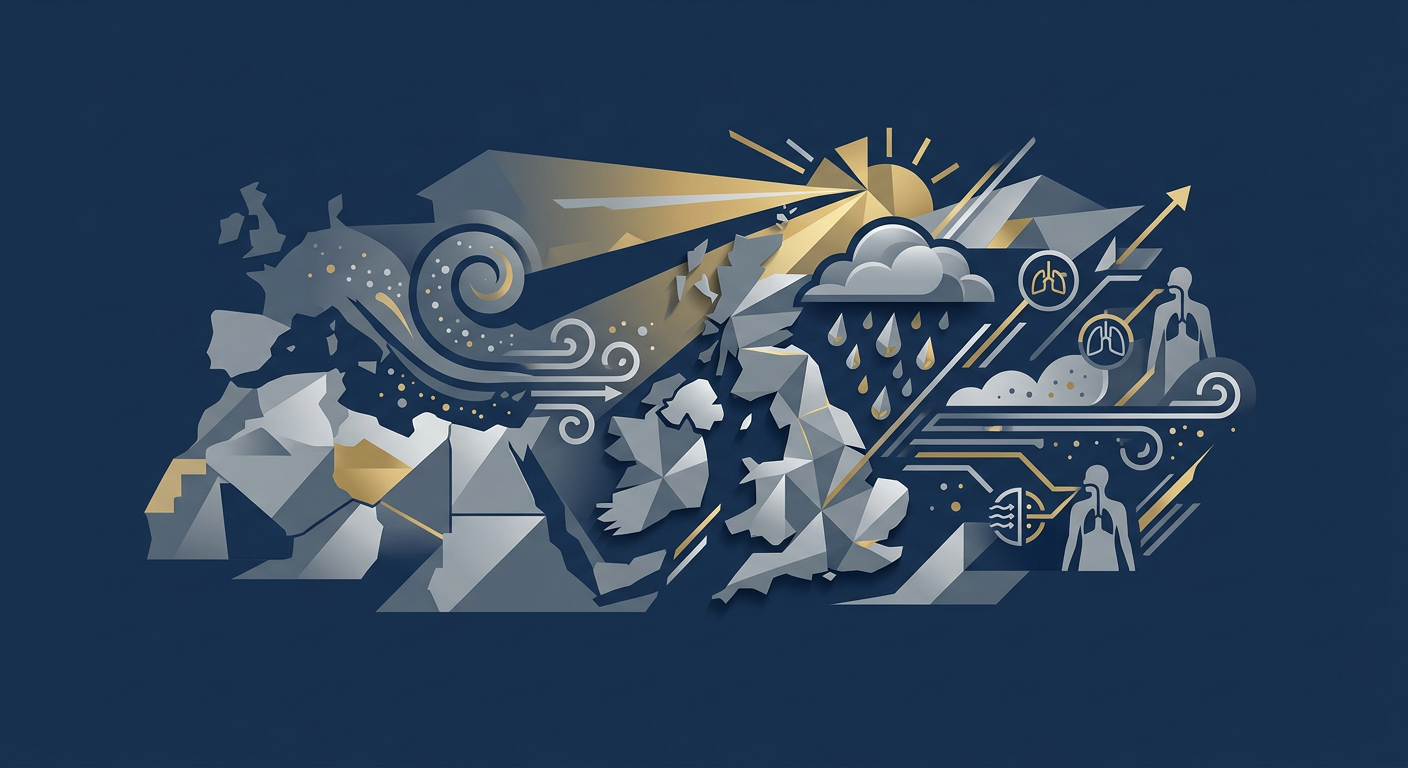
A significant plume of Saharan dust is sweeping across the United Kingdom, leading to hazy skies, remarkable sunsets, and the potential for “blood rain,” according to reports from the BBC, The Guardian, and Sky News. This atmospheric phenomenon, driven by strong southerly winds carrying fine sand particles thousands of miles from North Africa, is expected to create vibrant displays of deep gold and burnt orange at sunrise and sunset.
The Science of a 2,000-Mile Journey
The transport of dust from the Sahara Desert to the UK is a fascinating, and relatively common, meteorological event. It begins with powerful storms or strong surface winds in North Africa, which are potent enough to lift vast quantities of sand and dust high into the atmosphere. Once elevated, these fine particles can be carried for thousands of miles by prevailing wind patterns.
For the dust to reach the UK, a specific set of atmospheric conditions must align. Typically, this involves a low-pressure system, such as a storm, tracking across the western Mediterranean. This circulation draws warm air from North Africa northwards, acting as a conveyor belt for the airborne dust. As reported by The Guardian, this current event is occurring alongside what could be the warmest day of the year so far, with temperatures potentially reaching 19°C in southern parts of the country. The dust particles are incredibly fine, allowing them to remain suspended in the air for several days as they traverse Europe before arriving over British skies.
These events happen multiple times a year, particularly in the late winter and spring when winds from the Sahara are often at their strongest. While the journey is impressive, the concentration of dust that ultimately reaches the UK can vary significantly, which dictates the intensity of the observed effects.
“Blood Rain” and Fiery Skies Explained
The term “blood rain” has a long history, often viewed in the past as a dark omen. Scientifically, however, the phenomenon is straightforward. As raindrops fall through the atmosphere, they collect particles of dust suspended in the air. According to the Met Office, for the rain to appear genuinely red, a very high concentration of reddish-coloured particles—typically sand and dust rich in iron oxides—must mix with the water droplets within the clouds.
In reality, as noted by forecasters, truly red rain is exceedingly rare in the UK. The concentration of Saharan dust is usually too low. Instead, what is more commonly observed is a light film of yellowish or brownish residue left on surfaces like cars and windows after the rainwater evaporates. This is what meteorologists refer to as wet deposition.
The more visually stunning effect of the dust plume is its impact on sunrises and sunsets. The fine particles suspended high in the atmosphere scatter sunlight. This scattering effect is most pronounced at sunrise and sunset when the sun’s rays travel through more of the Earth’s atmosphere. The dust particles scatter the shorter wavelength colours, like blue and green, more effectively, allowing the longer wavelength colours, such as deep oranges, reds, and golds, to dominate the sky. This creates the spectacular and “fiery” displays reported by news outlets.
Air Quality and Health Implications
While the visual effects of the Saharan dust are often the main focus, the phenomenon also has a measurable impact on air quality. The dust contributes to an increase in particulate matter (PM), specifically PM10 and the finer, more hazardous PM2.5 particles. These particles are small enough to be inhaled deep into the lungs and can potentially enter the bloodstream.
For the general population, the health risks from the levels of dust typically seen in the UK are low. However, for individuals with pre-existing respiratory conditions, such as asthma or chronic obstructive pulmonary disease (COPD), children, and the elderly, the increased particulate matter can pose a greater risk. Exposure can exacerbate symptoms, leading to coughing, wheezing, shortness of breath, and irritation of the eyes and throat. Epidemiological studies have shown correlations between Saharan dust events and increases in hospital admissions for respiratory issues in affected regions. Authorities sometimes advise vulnerable individuals to reduce strenuous outdoor activity during more intense dust events.
It is worth noting that the dust can also have an impact on aviation, as very high concentrations can reduce visibility, making it more difficult for aircraft to operate safely.
Climatic Context and Future Projections
Saharan dust transport is a vital component of the Earth’s climate system, not just an occasional weather event. The dust plays a role in everything from fertilising the Amazon rainforest with essential nutrients like phosphorus to influencing the formation of tropical cyclones in the Atlantic. The dust layer can suppress hurricane formation by creating a layer of dry, stable air and by blocking sunlight, which can cool sea surface temperatures.
The relationship between these dust events and climate change is an area of active scientific research and debate. Changes in global temperatures, drought conditions, and land use can all affect the amount of dust lifted from the Sahara. Some research suggests that desertification and changing wind patterns could lead to more frequent or intense dust events. Conversely, other climate models predict that rising temperatures could lead to increased rainfall in parts of the Sahara, which would, in turn, reduce the amount of available dust for transport.
Historical data and recent significant events, like the 2020 “Godzilla” dust cloud, suggest an increasing trend in the intensity of these plumes over the last century. Understanding these long-term trends is crucial for predicting future impacts on weather, air quality, and global ecosystems.
FAQ
Is Saharan dust dangerous to health?
For most people in the UK, the dust poses a very low risk. However, it can affect those with pre-existing respiratory conditions, the elderly, and children, potentially worsening symptoms like coughing or wheezing.
How long will the Saharan dust be over the UK?
These events typically last for a few days. The dust will gradually disperse or be washed out of the atmosphere by rain systems moving across the country.
Why is it called ‘blood rain’?
The term comes from the reddish or orange tint the rain can have when it contains a high concentration of iron-oxide-rich dust particles. However, in the UK, the effect is usually a light coating of brownish dust on surfaces after the rain has dried.
What are your thoughts on the increasing intensity of these global weather phenomena? Share your observations and sound off in the comments below.






Leave a Reply