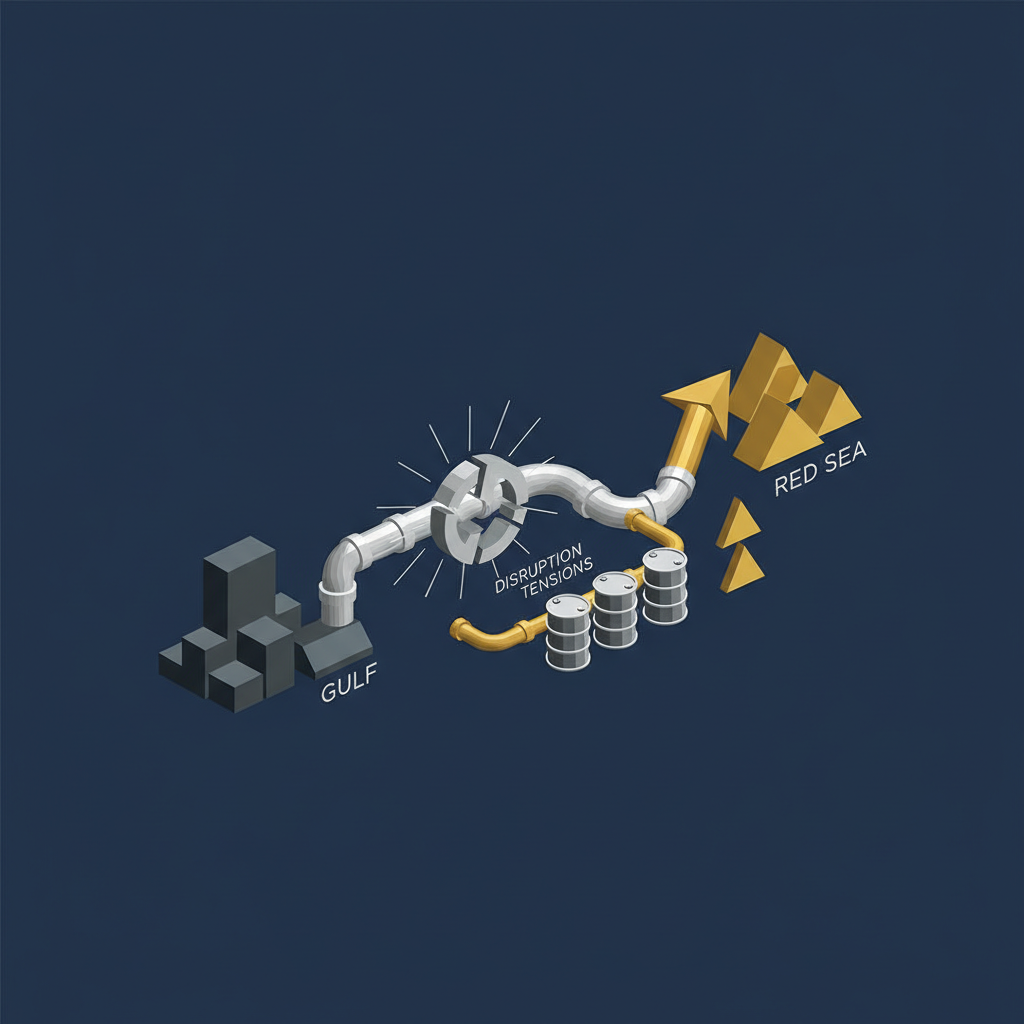
Saudi Aramco, the world’s largest oil exporter, has initiated a significant rerouting of its crude oil exports, diverting millions of barrels to its Red Sea port at Yanbu. This strategic pivot comes as escalating tensions and conflict with Iran have led to the effective closure of the critical Strait of Hormuz, threatening global oil supplies. The move, reported by multiple outlets, underscores Saudi Arabia’s urgent efforts to maintain its role as a reliable energy provider amidst profound regional instability. The rerouting aims to circumvent the dangers posed by the Gulf tensions, which have brought commercial shipping through the Strait of Hormuz to a near halt.
The Blockade of the Strait of Hormuz and its Impact on Oil Shipments
The Strait of Hormuz, a narrow waterway between Oman and Iran, serves as the world’s most vital energy chokepoint. It handled over a quarter of global seaborne oil trade in the previous year, with approximately 20 million barrels per day (bpd) of oil flowing through it in 2024. However, with the ongoing conflict involving Iran, the Strait has become effectively closed to non-military shipping, causing hundreds of oil and chemical cargo ships to become stranded.
This disruption has cascaded across the region, severely impacting other major Gulf producers. Nations like the UAE, Kuwait, and Iraq have struggled to navigate the perilous passage. Iraq, the region’s second-largest producer, has already been forced to cut oil production by nearly 1.5 million barrels per day as its storage tanks brim with unsold crude due to the lack of available tankers. Kuwait has also implemented a precautionary reduction in crude oil output and refining throughput, declaring force majeure due to the explicit threats against safe passage through the Strait and the “almost total absence” of vessels. Compounding the supply chain crisis, Aramco’s Ras Tanura refinery, one of the largest refining and export complexes, was temporarily shut down after being struck by debris from intercepted Iranian drones on March 2, 2026.
The East-West Pipeline: A Critical Alternative Route
In response to the unprecedented disruption, Saudi Aramco has leaned heavily on its vital East-West pipeline. This 745-mile pipeline, with a nominal capacity of 5 million barrels per day (bpd), is now being utilized to transport crude oil from the kingdom’s eastern oil fields to the Red Sea port of Yanbu. The pipeline’s capacity was even temporarily expanded to 7.0 million bpd in 2019 by converting natural gas liquids pipelines to carry crude.
The impact on Yanbu’s export activity has been immediate and substantial. Shipments from the Red Sea port have tripled, with five very large crude carriers (VLCCs) departing in the first four days of March, carrying a combined total of approximately 10 million barrels of crude. This surge has pushed average daily shipments from Yanbu to about 2.5 million barrels per day in early March, a dramatic increase from the 786,000 barrels per day recorded in February. To facilitate this shift, Aramco has actively notified its Asian customers to switch their loadings to Yanbu, ensuring continuity of supply despite the challenges in the Gulf. Egypt has also offered its Sumed pipeline to transport Saudi crude from Yanbu to the Mediterranean, providing an additional critical link for European markets.
Global Market Reaction and the Future of Oil Prices
The geopolitical turmoil and the effective closure of the Strait of Hormuz have sent ripples through global energy markets. Global oil prices have surged, with Brent crude futures increasing by 12% in the week following the escalation, and at one point rising by 16% to surpass $80 per barrel. On March 6, 2026, Brent crude even reached $92.69 per barrel, up 8.52% from the previous day. This sharp increase reflects heightened concerns over supply disruptions and the vulnerability of global energy chains.
Amidst this market volatility, Saudi Aramco’s stock demonstrated resilience, rising by 1.83% on March 3, 2026, a testament to investor confidence in the company’s ability to adapt and the perception that higher oil prices benefit the state-owned giant. The crisis highlights the critical importance of alternative routes and robust infrastructure like the East-West pipeline. While Saudi Arabia and the UAE possess some bypass infrastructure, its capacity is limited and cannot fully compensate for the volumes typically transiting Hormuz. The sustained disruption threatens global economic growth, with analysts warning of a domino effect and the potential for central banks to raise borrowing costs to curb inflation if energy prices remain elevated.
FAQ
Q1: What is the Strait of Hormuz?
A1: The Strait of Hormuz is a narrow, strategically vital waterway located between Oman and Iran, connecting the Persian Gulf with the Gulf of Oman and the Arabian Sea. It is the world’s most critical energy chokepoint.
Q2: Why is Aramco rerouting oil to the Red Sea?
A2: Saudi Aramco is rerouting crude oil exports to its Red Sea port at Yanbu in response to the effective closure of the Strait of Hormuz. This closure is due to escalating conflict with Iran, which has made commercial shipping through the Strait too dangerous.
Q3: How is this affecting global oil prices?
A3: Global oil prices have risen significantly due to the disruption, with Brent crude futures increasing by 12-16% in the week following the escalation of tensions. The market fears substantial supply disruptions from one of the world’s most critical energy transit routes.
What long-term changes do you foresee in global energy trade routes and strategies if tensions in the Strait of Hormuz persist?







Leave a Reply