The financial technology landscape is undergoing a profound transformation, driven by the emergence and rapid adoption of sophisticated platforms that democratize access to advanced analytical tools and foster vibrant trading communities. This phenomenon is attracting unprecedented levels of attention, with recent market observations indicating a significant surge in interest and user engagement across various digital channels. This escalating trend has profound implications for how individuals approach investment and how financial institutions adapt to evolving market dynamics.
The Ascent of Collaborative Charting and Analytics Platforms
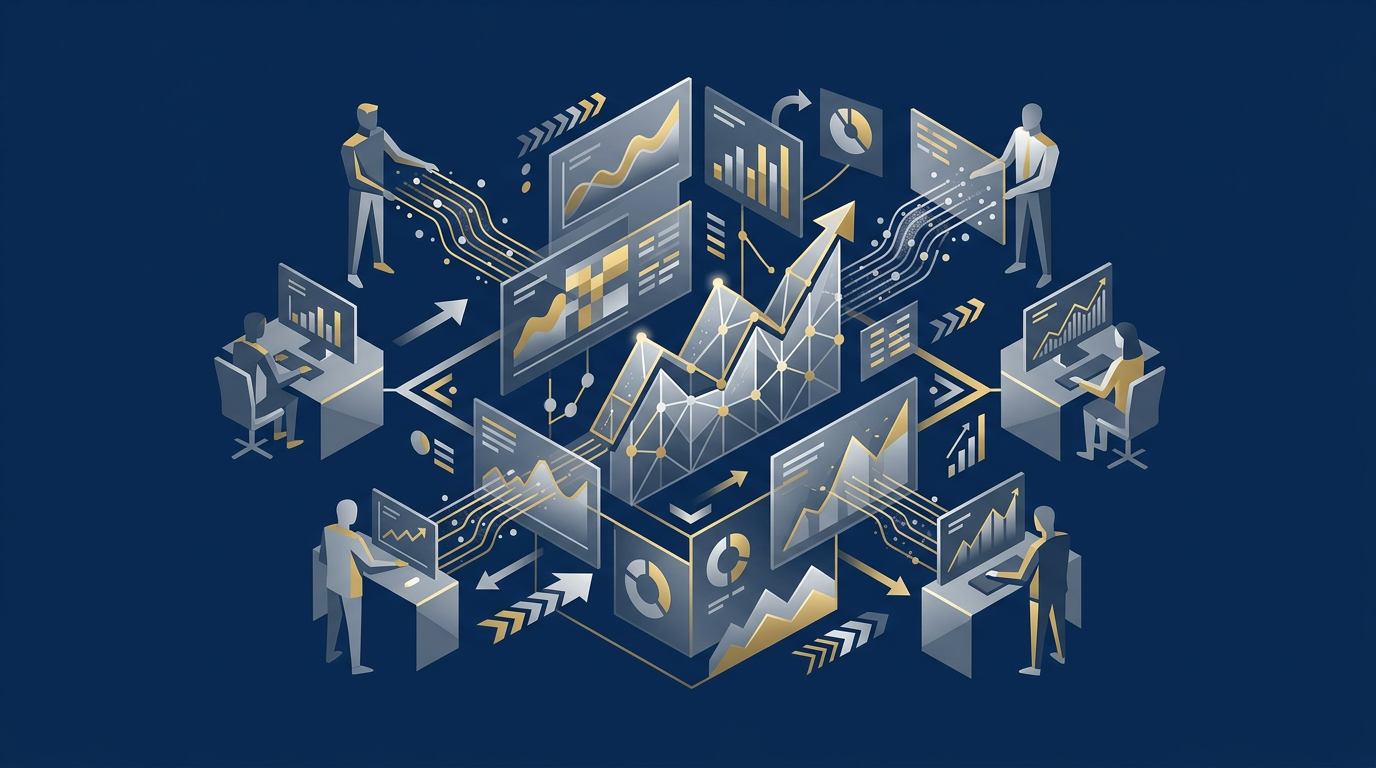
The rise of platforms offering integrated charting, analytical tools, and social networking capabilities represents a pivotal shift in the accessibility of financial markets. Historically, advanced technical analysis and real-time data visualization were the exclusive domain of institutional traders and professional analysts, often requiring expensive proprietary software and specialized training. However, according to industry analysis, the proliferation of cloud-based solutions and intuitive user interfaces has effectively leveled the playing field, empowering a broader demographic of retail investors.
This democratization has coincided with a period of heightened retail investor participation in global markets, fueled by factors such as commission-free trading and increased financial literacy initiatives. The confluence of these trends has created fertile ground for platforms that offer not just tools, but also a collaborative environment where users can share insights, strategies, and even replicate trades. Sources indicate that this collaborative aspect is a primary driver of engagement, transforming solitary analysis into a dynamic, community-driven pursuit, thereby amplifying the reach and influence of these innovative technologies.
Redefining Financial Analysis and Market Engagement
The impact of these advanced platforms extends beyond mere tool provision; they are fundamentally reshaping how financial analysis is conducted and consumed. By integrating real-time data feeds with customizable charting functionalities, these platforms enable users to perform in-depth technical and fundamental analysis with unparalleled flexibility. This includes access to a vast array of indicators, drawing tools, and historical data, which can be applied across diverse asset classes from equities to cryptocurrencies.
Furthermore, market observations suggest a critical evolution in how market participants engage with information. Beyond raw data, these platforms emphasize visual storytelling through charts and annotated analyses shared within their communities. This peer-to-peer exchange of ideas and perspectives fosters a more interactive learning environment, allowing users to benchmark their strategies against others and gain exposure to alternative analytical approaches. According to recent reporting, this social dimension not only enhances individual decision-making but also contributes to the rapid dissemination of market sentiment and emerging trends, creating a self-reinforcing cycle of engagement and analytical refinement.
Technological Underpinnings and Market Disruption
The technological sophistication underpinning these platforms is a key enabler of their widespread adoption and impact. Leveraging robust cloud infrastructure, they provide scalable access to massive datasets and complex computational capabilities, ensuring seamless performance even under high demand. Real-time data streaming, powered by advanced APIs, allows users to react to market movements instantaneously, a capability once reserved for high-frequency trading firms.
Sources indicate that the integration capabilities of these platforms are also disrupting traditional financial services. Many offer direct brokerage integrations, allowing users to execute trades directly from their charting interface, streamlining the entire investment process. This level of integration poses both opportunities and challenges for incumbent financial institutions. While some are embracing partnerships or developing similar functionalities, others face the imperative to innovate rapidly to avoid being outpaced by these agile fintech disruptors. The continuous evolution of features, driven by user feedback and technological advancements like AI-driven pattern recognition, signals a future where these platforms become even more integral to the financial ecosystem.
Strategic Implications for Investors and Institutions
For individual investors, these platforms represent a significant enhancement of their analytical toolkit, fostering a more informed and strategic approach to market participation. The ability to backtest strategies, simulate trades, and learn from a global community of traders empowers users to develop more robust investment theses. According to various news agencies, this access to institutional-grade tools at an affordable or even free tier has substantially lowered the barrier to entry for sophisticated trading practices.
From an institutional perspective, the surge in popularity of these platforms presents a dual challenge and opportunity. While they empower retail investors, potentially fragmenting market liquidity or creating new forms of crowd-driven market volatility, they also serve as rich data sources for sentiment analysis and trend identification. Market intelligence indicates that some institutions are exploring how to monitor these platforms to gauge retail sentiment, identify emerging narratives, and even discover potential market inefficiencies. Understanding the collective intelligence and behavioral patterns exhibited on these platforms could become a strategic imperative for sophisticated institutional players aiming to maintain an edge in an increasingly democratized financial landscape.
The Road Ahead: Challenges and Future Trajectories
Despite their transformative potential, the growth of collaborative charting and analytics platforms is not without challenges. Issues pertaining to data privacy, information overload, and the potential for the propagation of misinformation within large communities require robust governance and ethical frameworks. Regulators globally are increasingly scrutinizing digital financial platforms, and adherence to evolving compliance standards will be crucial for sustained growth.
Looking ahead, industry analysts suggest that these platforms are poised for further innovation. The integration of advanced artificial intelligence and machine learning algorithms promises even more sophisticated predictive analytics and hyper-personalized trading insights. Expansion into new asset classes, including alternative investments and tokenized securities, is also anticipated. Ultimately, the future trajectory will likely see these platforms becoming even more embedded in the fabric of global finance, continually pushing the boundaries of accessibility, collaboration, and analytical sophistication.
Key Takeaways:
Advanced charting and social trading platforms are democratizing access to sophisticated financial tools and analysis.
The collaborative and community-driven aspects are significant drivers of user engagement and learning.
Technological advancements, including cloud computing and API integrations, are enabling seamless, real-time access to market data and execution capabilities.
These platforms are empowering retail investors with institutional-grade tools and influencing institutional strategies through sentiment analysis.
Future growth will hinge on addressing data privacy, regulatory challenges, and integrating emerging technologies like AI.
FAQ
Q: What is the primary benefit of using a collaborative charting and analytics platform?
A: The primary benefit is the democratization of sophisticated financial analysis tools, combined with the power of community-driven insights and learning. Users gain access to advanced charting features, real-time data, and the ability to share and discuss strategies with a global network of traders, fostering a more informed and interactive approach to investing.
Q: How are these platforms impacting traditional financial institutions?
A: These platforms are prompting traditional financial institutions to re-evaluate their service offerings. They represent both a challenge, by democratizing access to tools previously exclusive to institutions, and an opportunity, as institutions can leverage insights from these platforms for sentiment analysis or explore partnerships to integrate similar functionalities into their own services.
Q: What are some potential future developments for this type of platform?
A: Future developments are likely to include deeper integration of artificial intelligence and machine learning for predictive analytics, enhanced personalization of user experiences, and expansion into a broader array of asset classes, including alternative investments and tokenized securities. Addressing evolving regulatory frameworks and ensuring data privacy will also be critical areas of focus.







Leave a Reply